Every year around this time, a law almost nobody has heard of forces a decision almost nobody outside federal HR pays attention to, and this year is no exception. Under the Federal Employees Pay Comparability Act, the President has until August 31 to send Congress an "alternative pay plan" letter, or a statutory formula tied to private-sector wage growth kicks in automatically and hands federal workers a raise bigger than any administration in memory has been willing to allow. As FedSmith notes, that deadline "rarely slips" — last year's letter landed on August 28, three days early, like a kid turning in homework just early enough to look responsible.
This year's letter is expected to say the same thing it usually says: nothing, for civilians. Per Government Executive, Trump's proposal is a straight freeze on the 2027 civilian pay raise, while service members get bumped 5-7% depending on rank. It's worth sitting with that gap for a second — not because the military doesn't deserve raises, but because the split tells you exactly which federal workforce this White House is willing to spend political capital defending, and which one it treats as an applause line at budget hearings.
There's a ritual to how this plays out, and both sides know their lines. Democrats introduce the FAIR Act — this year proposing something in the 3-4% range — and it goes exactly nowhere, as it has every year since 2014. The House funding bill stays conspicuously silent on federal pay, which functions as a quiet endorsement of the freeze. The Senate hasn't shown its full hand yet, though it has floated trimming even the military raise to 3.6% across the board, suggesting Congress isn't feeling especially generous toward anyone in uniform or out of it this cycle.
Here's the part that should sound familiar to anyone who watched last year: Trump proposed a freeze then too, and it ended in a 1% across-the-board raise plus an extra 3.8% carve-out for law enforcement. Both Government Executive and FedSmith point to the same pattern repeating almost exactly — an opening bid of zero that settles, after the theater plays out, somewhere around one percent. That's not a coincidence; it's a negotiating posture that both branches have learned to perform on schedule, like a play that gets restaged every August with a new cast reciting an old script.
Set against real inflation, a 1% raise is a pay cut with better branding, and federal employees know it — you can only tell someone "the market says you're worth more" so many years running before "the market" starts sounding like an excuse. Whatever letter arrives by the 31st, the honest headline isn't "Trump freezes federal pay." It's that Washington has built a system where the automatic, market-based outcome is treated as the emergency to be prevented, and the manual override is treated as fiscal discipline. Judge which one actually reflects what a dollar is worth these days.
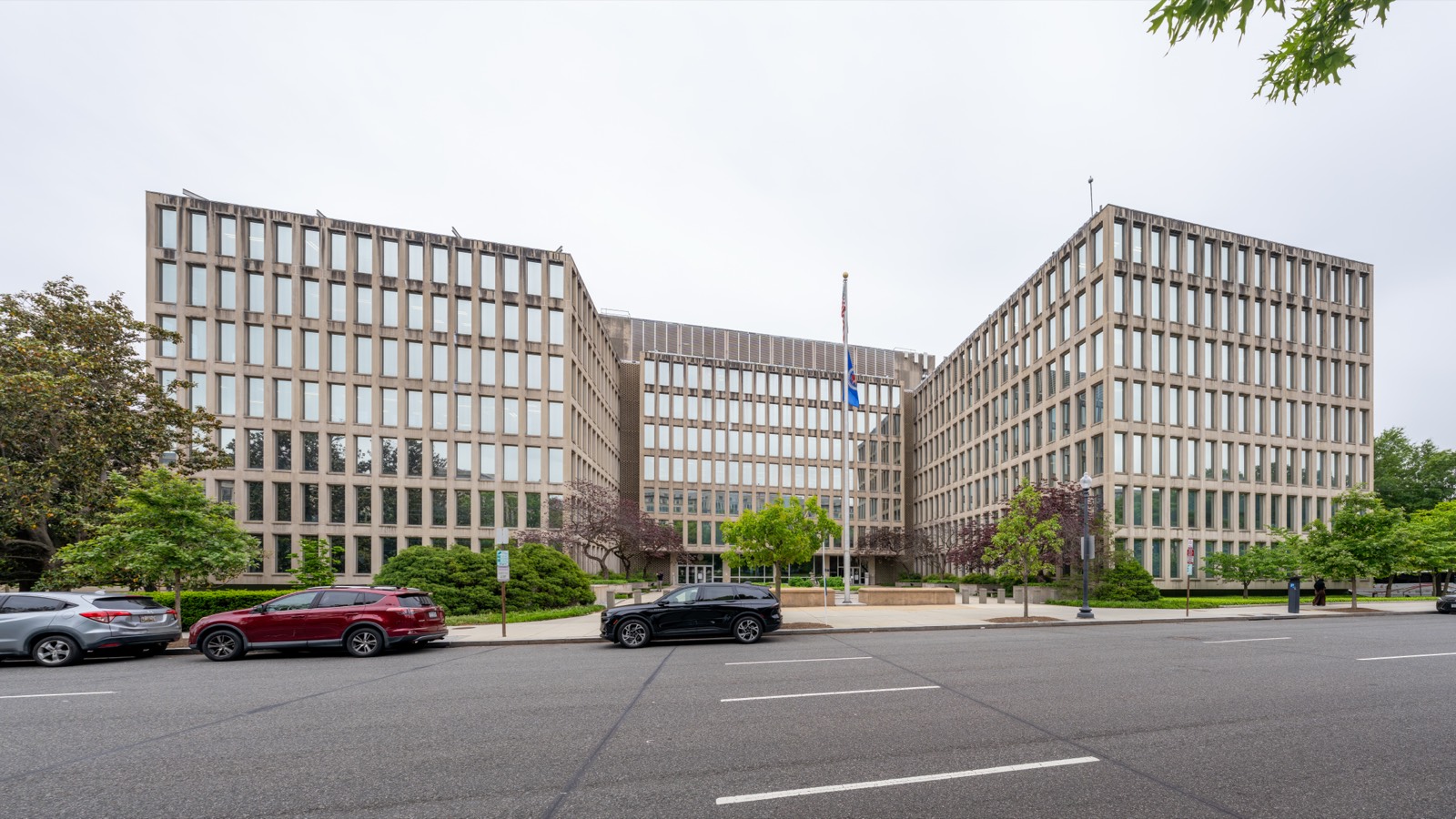
Photo: U.S. Office of Personnel Management building, by ajay_suresh, licensed under CC BY 4.0.