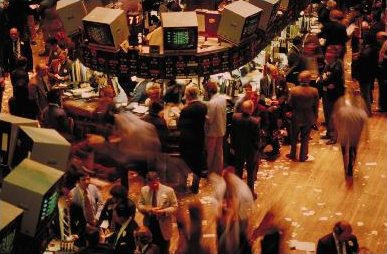
On June 5, 2026, the market had its worst day in months. The S&P 500 fell 2.64% — its worst day since October — and the Nasdaq Composite dropped 4.18%, its worst single day since April 2025. The Dow, less exposed to tech, still fell 695 points. Stocks, bonds, bitcoin, and gold all sold off together, which is the kind of everything-down day that tends to mean investors are repricing risk broadly, not rotating out of one sector into another.
The trigger was, on its face, good news: stronger-than-expected jobs data. But stronger jobs data raised the odds of a Federal Reserve rate hike, and a market that had been pricing in cuts got caught leaning the wrong way. The CME FedWatch Tool showed the probability of an October hike jump to roughly 50%, up from 34% just before the data dropped. Wall Street's fear gauge, the VIX, spiked 40% to a two-month high.
AI stocks took the brunt of it. After a run where the market treated AI infrastructure spending as a one-way bet, this was the first real gut-check — a reminder that valuations built on the assumption of endlessly cheap capital get exposed fast when rate expectations move. That's a familiar pattern to anyone who watched the tech layoffs pile up through 2026 even as AI capex kept climbing: the money and the jobs have not been moving in the same direction.
There's a real disconnect worth naming here. Companies have spent the year telling workers that AI investment justifies layoffs, while spending hundreds of billions on the infrastructure behind that same AI. When the market briefly stopped rewarding that story unconditionally, it wasn't because AI stopped mattering — it was because rate expectations shifted, and suddenly the cost of all that capital mattered again too.
For American workers, a rate hike isn't an abstraction either. Higher rates mean slower hiring, tighter credit, and less room for the kind of investment that creates new domestic jobs rather than new data centers. Wall Street had one bad afternoon. The labor market's been having a bad year.
Read the original reporting: Nasdaq, S&P 500 suffer worst day of year as AI stocks tumble and Fed rate-hike odds rise (CNN Business).