The White House fact sheet is dry policy language, but the numbers buried in it tell an uncomfortable story. New H-1B petitions for workers outside the U.S. now require a $100,000 payment before the Department of Homeland Security will process them, with case-by-case exemptions reserved for cases deemed in the "national interest." The Departments of Labor and Homeland Security have been directed to issue joint enforcement guidance, and the Labor Secretary has been tasked with revising prevailing wage levels for the program — an implicit admission that current wage floors haven't been doing their job.
The data cited to justify the move is the real story. The H-1B share of IT work rose from 32% in fiscal year 2003 to 65% in recent years. That's not a modest adjustment to fill skill gaps — that's a wholesale shift in who staffs American technology jobs. Meanwhile, computer science graduates face a 6.1% unemployment rate and computer engineering graduates 7.5%, both well above the unemployment rate for college graduates generally. Foreign STEM workers in the U.S. doubled between 2000 and 2019 while STEM employment overall grew 44.5% — growth that, on paper, sounds healthy, until you ask who actually got those jobs.
The fact sheet cites specific company examples that read like a rap sheet. One company received 5,189 H-1B approvals in fiscal year 2025 while laying off roughly 16,000 U.S. workers. Another received 1,698 approvals while cutting 2,400 jobs in Oregon. A third has received 25,075 H-1B approvals since 2022 while shrinking its U.S. workforce by 27,000. These aren't companies filling gaps nobody else could fill. These are companies running two hiring pipelines simultaneously — one for laying off Americans, one for bringing in visa labor — and calling it workforce optimization.
The core defense of the H-1B program has always been that it exists to bring in talent America genuinely lacks. A 65% IT workforce share and a 6%-plus unemployment rate among CS grads make that defense difficult to sustain with a straight face.
A $100,000 fee is a blunt instrument, and blunt instruments have side effects — genuinely scarce specialists could get caught in the same net as the low-cost labor arbitrage the policy is aimed at. But blunt is what happens after years of the visa program's own defenders refusing to acknowledge the wage-suppression math sitting in plain sight. When 65% of an entire occupational category is staffed through a program originally sold as a narrow bridge for exceptional talent, "narrow" has stopped meaning anything.
The companies named in this fact sheet aren't hiding their practices — they're filing the paperwork with the federal government, in public, year after year. The fee doesn't fix the incentive structure that made this profitable in the first place. It just makes it more expensive to keep doing it exactly the same way.
Read the original fact sheet: White House fact sheet on nonimmigrant worker entry suspension.
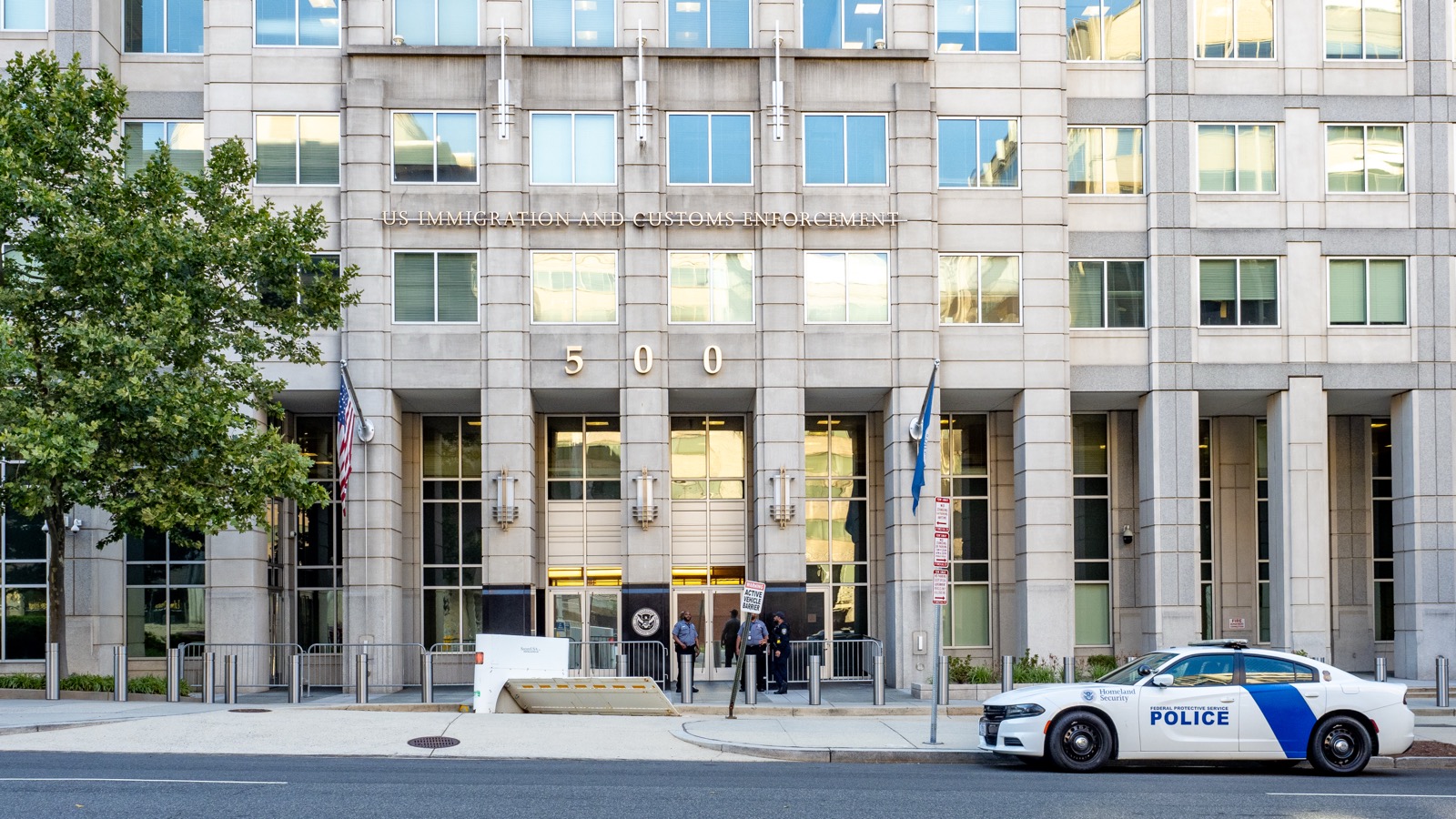
Hero image: U.S. Immigration and Customs Enforcement building, Washington, DC. Photo via Wikimedia Commons, CC BY 2.0.