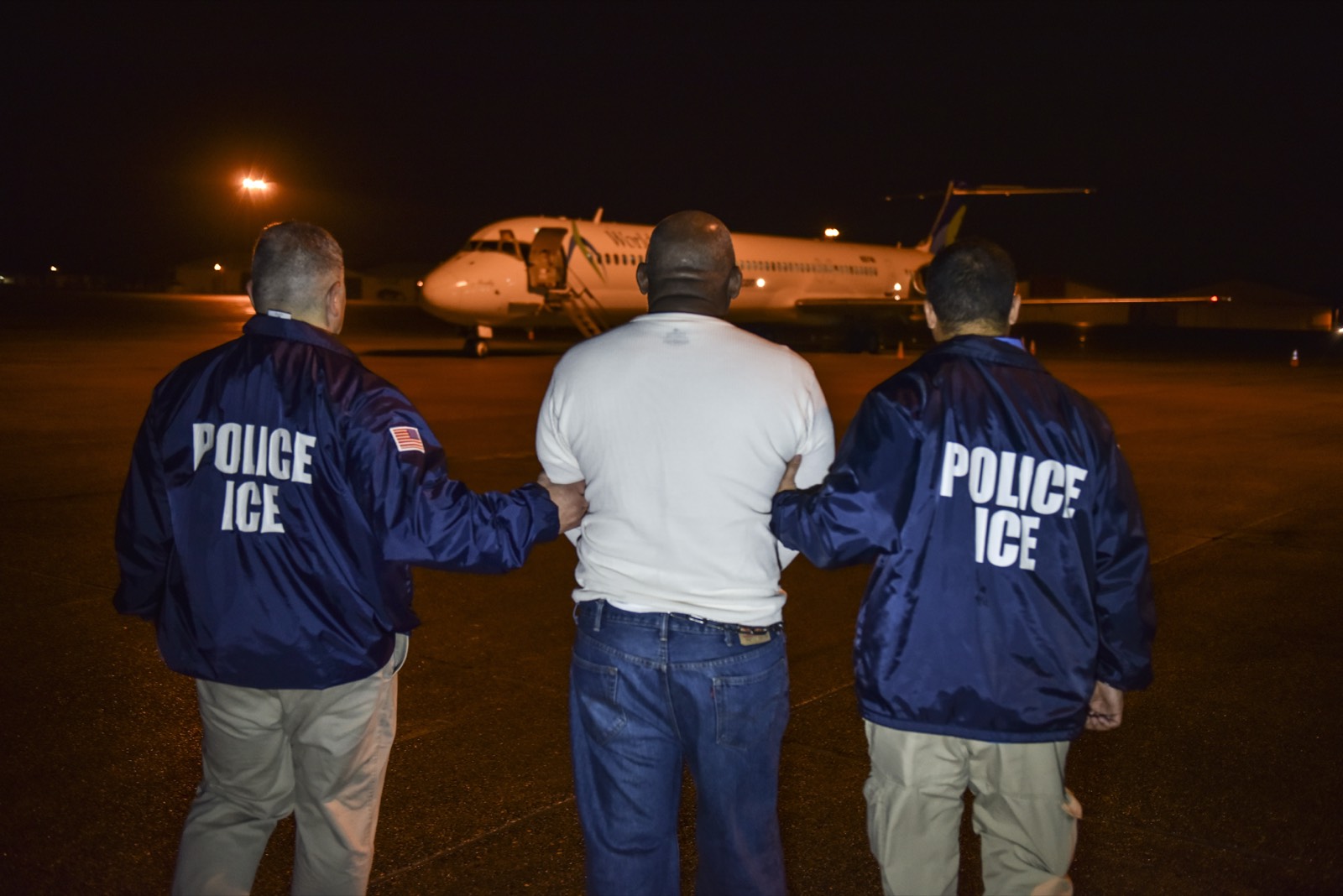
Thursday, a plane carrying about 20 deportees — mostly Venezuelan, Cuban, and Colombian nationals — left Louisiana, stopped in Senegal, and landed in Monrovia, Liberia. It's the first flight under a new agreement that could send up to 1,200 people there over the next year, part of a broader set of arrangements the U.S. has struck with the Democratic Republic of Congo, Central African Republic, Equatorial Guinea, Cameroon, Ghana, and Sierra Leone.
The people on that flight aren't being sent to Liberia because Liberia is their country. They're being sent there, per the reporting, because immigration judges determined they couldn't safely be returned to Venezuela, Cuba, or Colombia — protection findings, not removal orders in the ordinary sense. In Liberia, they're technically free: free to leave when they want, free to apply for asylum there, with the International Organization for Migration and the U.N. providing services on the ground.
"Free to leave" is doing a lot of work in that sentence. Free to leave to where, exactly, with what money, on what document? A third-country deportation arrangement solves an American diplomatic and political problem — where do you put someone you've decided not to keep but also can't legally send home — without solving the actual human problem, which is that the person still doesn't have anywhere they actually want to be.
I don't object to third-country agreements as a category. Countries make these arrangements, they're a real tool, and the alternative — indefinite detention on U.S. soil for people the courts won't let you deport to their home country — isn't obviously more humane. What I'd want before scaling this to 1,200 people a year is transparency about what Liberia is actually getting in exchange, what happens to people who can't or won't apply for asylum there, and whether "free to leave" comes with any actual path anywhere. A humane immigration policy needs an honest accounting of where people end up, not just where they're no longer allowed to be.