The Department of Justice is now formally asking American citizens to come forward if they believe they lost out on a job because an employer preferred a visa holder. Assistant Attorney General for Civil Rights Harmeet Dhillon put the ask directly: "Are you an American citizen who has been harmed by inappropriate preferences for foreign workers, eg H1-B or other?"
This is a meaningful shift, because most of the H-1B abuse discussion up to now has lived in the space of statistics and anecdotes — wage gaps, layoff timing, remote-work loopholes — without a formal channel for individual workers to document their own experience. A tip line turns "the program is being abused" from a pattern economists infer from aggregate data into something that can, in theory, be investigated case by case.
The political backing behind it is unusually broad. Florida Governor Ron DeSantis called the program "a total scam," adding: "These companies game the system. You have some of these companies that are laying off large numbers of Americans." On the other end of the political spectrum, Senator Bernie Sanders has made nearly the identical argument for years: that H-1B's real function "is not to hire 'the best and the brightest,' but rather to replace good-paying American jobs." When DeSantis and Sanders are describing the same mechanism in the same terms, that's not partisan noise — that's convergence on an actual problem.
The scale of what's being reviewed is significant: the administration says it's examining all 55 million existing U.S. visas, not just the 65,000 standard plus 20,000 advanced-degree H-1B slots that fiscal 2026 has already exhausted. Most H-1B holders, per DeSantis, come from India — a fact relevant to understanding the program's current shape, not a basis for treating individual workers as the problem. The problem is the incentive structure employers operate under, not the nationality of the people filling it.
A tip line isn't a fix by itself — it depends entirely on what DOJ does with what comes in. But it's the first mechanism that puts the burden of investigation on the government rather than on individual workers who've had no formal way to flag what happened to them. That's worth watching closely.
Read the original reporting: DOJ asks public to report visa discrimination against American workers (Fox News).
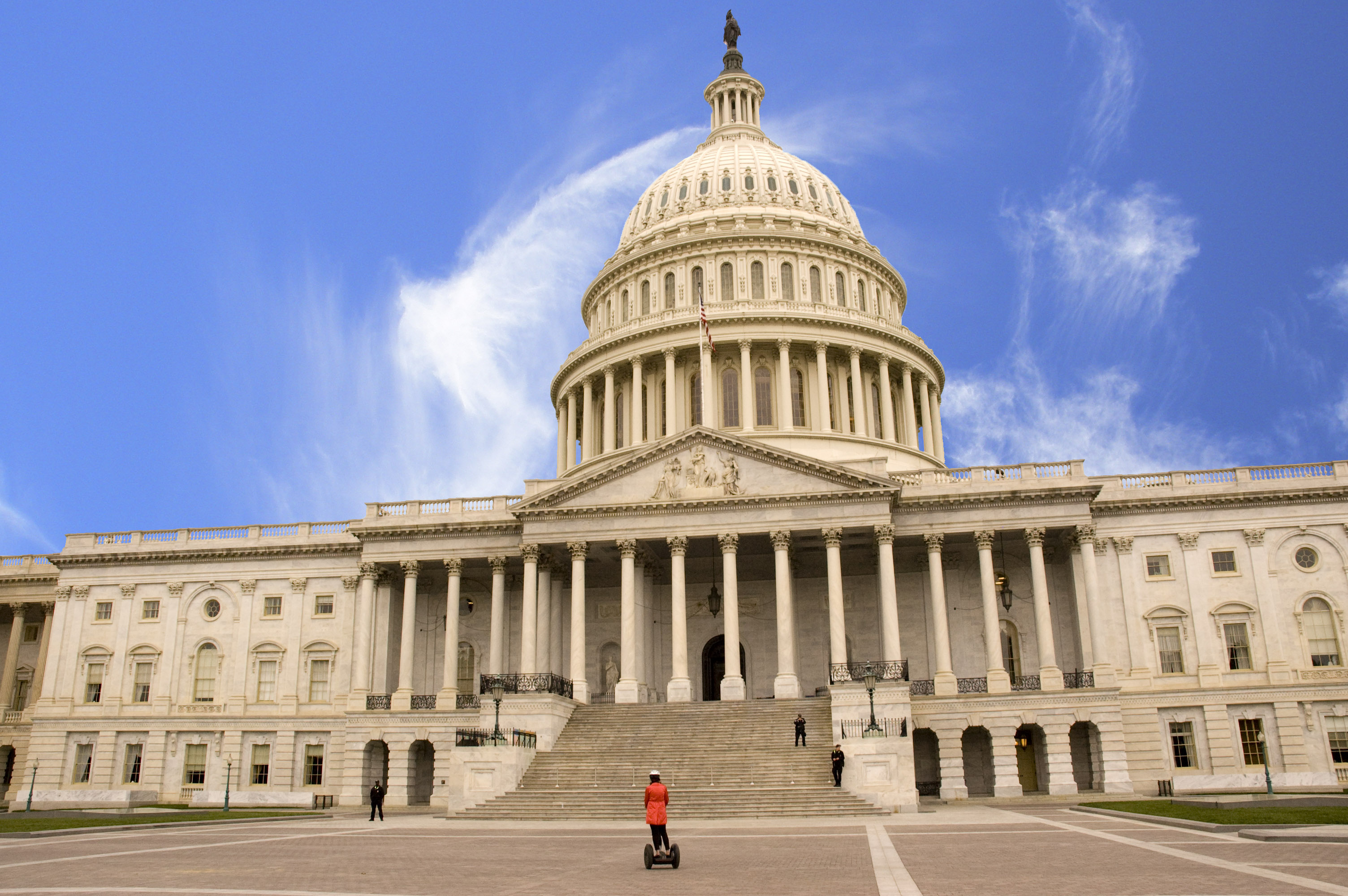
Photo: United States Capitol Building, CC BY-SA 3.0, via Wikimedia Commons.